
Expansion of the test chamber for climate mode
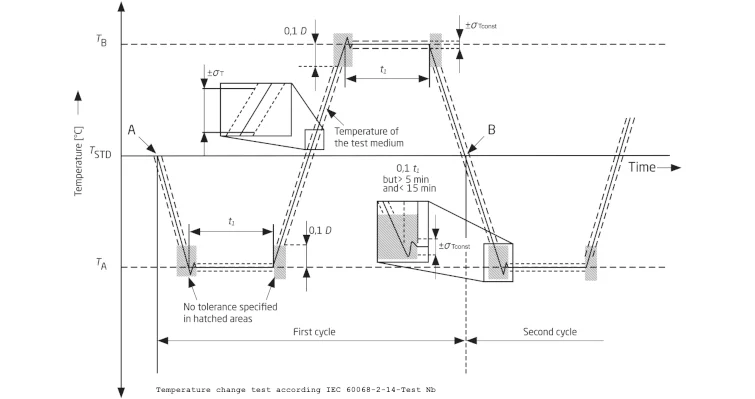
- IEC 60068-2-30, Test Db, variants 1 and 2
- IEC 60068-2-38
- MIL-STD-810H, Methods 507.5
- JESD22-A100D
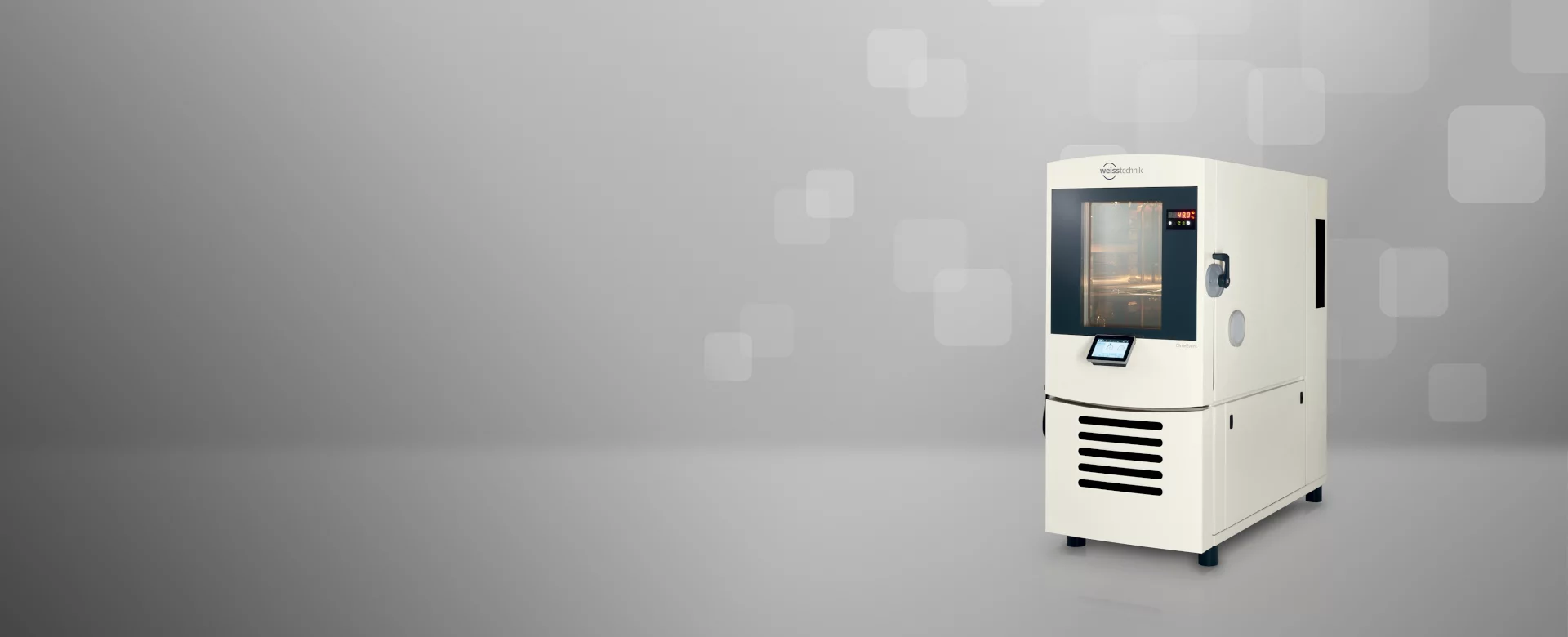
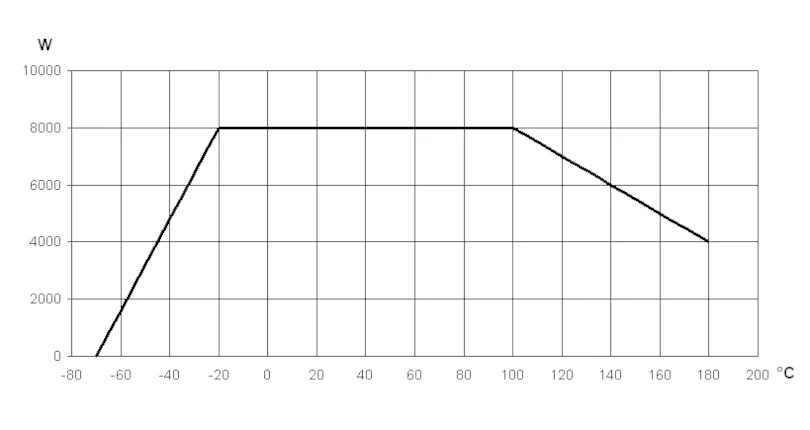
Our stress screening test chambers, TempEvent model, feature high rates of temperature change, from 10 to 25 K/min. They are ideal for ageing tests as well as for electrically operated test specimens with high heat loads (e.g. 8000 W at 20°C) and heavy test specimens (of up to 500 kg). For these challenges, in particular, where standard solutions quickly reach their limits, our temperature and climatic test chambers are designed for rapid thermal cycling tests.
With heat compensation of 8000 W at 20°C, for example, our test chambers are best suited for testing high-performance hardware such as CPUs, GPUs or TPUs. Even in the case of intensive waste heat from the test specimen, they ensure stable test conditions and reliable results, even under extreme loads.
Heavy loads meets dynamics: our test chambers enable the testing of heavy test specimens weighing up to 500 kg without compromising on the temperature change rate. This allows you to test even high-mass components under realistic, dynamic conditions.
Triple test material fuse included as standard. Active test items can be deenergized via a potential-free contact. Test chamber can switch off in the event of a fault in the test material or be set to a defined value (optional).
Despite their high performance, our test chambers are equipped with the intelligent GreenMode. This enables a significant reduction in energy consumption and thus also in the total cost of ownership (TOC). For sustainable testing processes without compromising performance.
Our test chambers can be seamlessly integrated using our SIMPATI software and interfaces such as SimServ, LabView, OPC UA, PROFIBUS, PROFINET or EtherCAT. SECS/GEM is available for the semiconductor industry; ASCII continues to be available as before.
Where -50°C is sufficient, we offer our high-performance test chambers with the natural refrigerant CO₂ (GWP = 1) on request.
This has clear advantages: lower electricity costs, no expenditure for leak testing, and quieter operation. A sustainable solution that pays off.

In addition to the software-side test object protection, the hardware test object protection is also included in the basic equipment. With its own Pt100 sensor and its own hardware, it is system-independent and can effectively protect the test object from incorrect temperatures in the event of a fault.

In the basic equipment, a USB port for data recording (csv) and an Ethernet port are available. The cabinet can be controlled via the network connection with our software S!MPATI® or the data can be recorded. Additionally, the cabinet can also be controlled by external programs via our own protocol SimServ.
In the basic equipment, a potential-free contact is available. In the event of a malfunction of the test cabinet, the test object can be switched off via this contact. This can prevent an unacceptable temperature rise in the test chamber due to heat dissipation of the test object.

The size, position, and design of our access ports are as individual as your test object and your tests. Talk to us. We have the right solution for every requirement.
For climatic tests, a water tank with a volumetric capacity of 20 litres is located under the test space door. If the appropriate water supply is available, it can be filled manually or automatically (included as standard). Optionally, a demineralisation unit can be pre-installed.

With this, the test object can be controlled via appropriate circuits. For example, it can be switched on and off via the digital channel using a relay. Optionally, a specific behavior of the test chamber can be programmed via the inputs. For example, in the event of solidification of the test object, the test chamber can be regulated to room temperature to prevent aging of the test object.

In the test chamber, there is an LED ceiling lighting. It ensures uniform and bright illumination, even when standing in front of the test chamber and blocking the incoming light with the upper body.

A lot of the time, it’s important to have good view of the test specimen. This is why our chambers can be equipped with a heated, 5x glazed pane.

The test cabinet is designed to be transported with simple tools. Optionally, rollers are available, allowing the test cabinet to be moved without any tools.

Control/programming and monitoring unit, 18 cm (7”) for sizes 270 and 480 litres. 25.4 cm (10”) for sizes 800 and 1300 litres. This allows all settings to be made and test programs programmed conveniently.
| Testspace volume (l) | 268 | |||
| Test Space Dimensions (H x W x D) (mm) | 750 x 580 x 615 | |||
| External Dimensions (HxWxD) [mm] | 1950 x 895 x 2322 | |||
| Total load (kg) | 140 | |||
| Voltage Rating | 3/N/PE AC 400 V ±10 % 50 Hz | |||
| Electrical Connection | CEE-Connector, 32 A | |||
| Cooling (air-cooled/ water-cooled) | ✓ / - | |||
| Refrigerant (main/pre-cooling) | R449A / R23 (R469A) | |||
| Temperature range [°C] | -70 … 180 | |||
| Range for temperature change rate (K/min) | 10 ... 25 | |||
| Range for maximum heat compensation (W) | 6000 ... 7500 | |||