
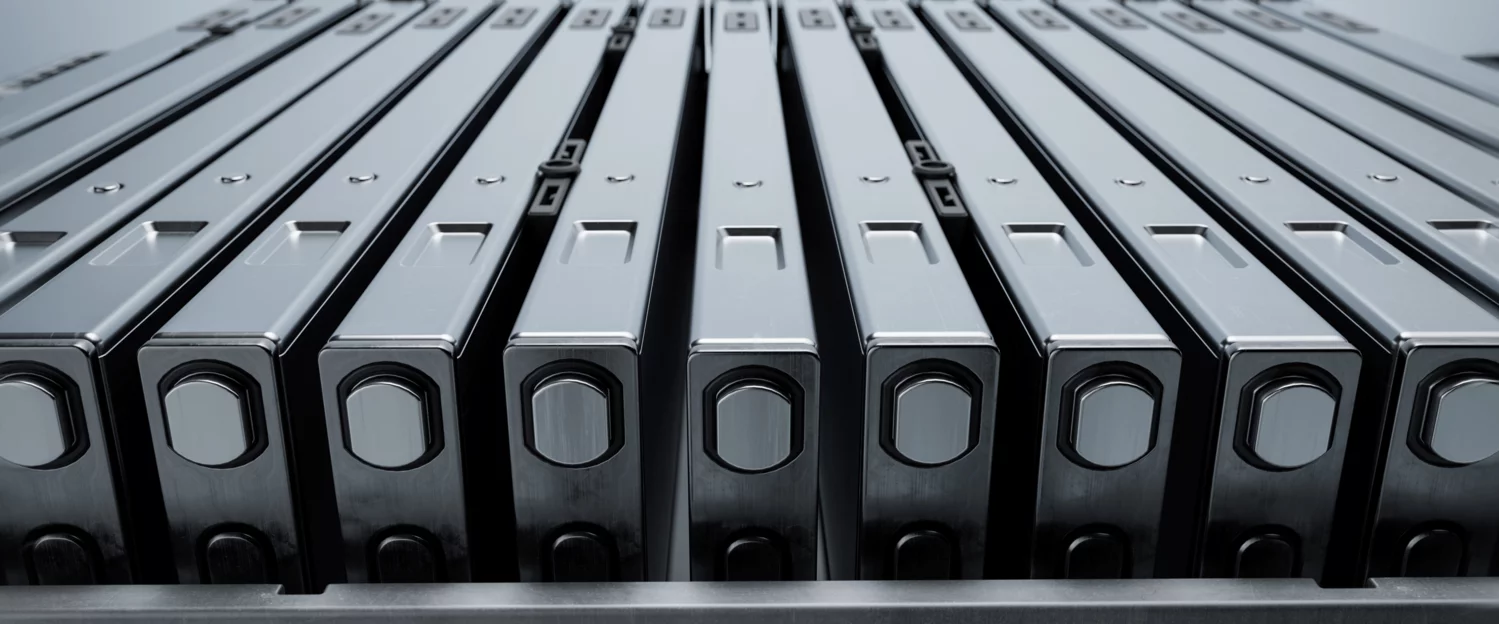
New battery types place greater demands on dry rooms, sensors and production environments. Tiered solutions such as mini environments, intelligent control strategies and energy efficient dry-room technology help to combine process reliability and cost efficiency.
Battery cell production is developing rapidly. In addition to classic lithium-ion cells for automotive applications, the focus is increasingly on special batteries for safety-critical applications – such as defense, aerospace, medical technology, energy infrastructure, or industrial high-performance applications. This also changes the requirements for the production environment.
Dry rooms have long been established in battery production. But while many production concepts have thus far been strongly geared towards standardization, high quantities and reproducible large-scale series, new cell chemistries and special applications have much more differentiated requirements. Moisture, particles and possible emissions must be controlled more precisely than ever before. Even the tiniest of deviations can have an impact on material stability, cell performance, service life and process reliability.
Humidity remains one of the most critical influencing factors
Humidity is a key risk in many of the process steps in battery cell production. In the early phases in particular, for example in the manufacture of electrodes, the preparation of materials or the cell assembly , the smallest amounts of water are enough to permanently affect sensitive materials.
The problem is that impact like this is not always apparent immediately. A cell can go through the initial production process seemingly without any problems at all, while negative impact only comes to light weeks or months later , for example through reduced performance, faster aging or failures in application. A stable and reproducible dry room atmosphere is therefore not just a question of quality assurance, but also an essential prerequisite for economical and safe battery production.
While classic NMC or LFP cells are already sensitive to moisture, many special batteries are even more demanding. In the case of highly reactive materials, such as those used in thermal batteries, even minimal dew point deviations can lead to irreversible material damage. For battery types with aggressive or unstable media too, the requirements for air ducting, filtration, monitoring and safety concepts are increasing considerably.
Special batteries require different dry room concepts
Dry rooms for classic automotive cells are often designed for throughput, standardization, and large production volumes. It’s a different situation when it comes to special batteries: these often involve smaller quantities of material, special cell chemistries, flexible manufacturing processes and increased safety and process control.
Especially in areas such as defense or aerospace, there are also often applications where availability, reliability and technological sovereignty are particularly important. The production environment must therefore not only be extremely stable, but also adaptable. Conversions, changing process layouts or additional requirements due to explosion and hazardous material safety can have a significant influence on the design of a dry room.
In terms of planning, this means that the dry room must not be considered in isolation. Air ducting, dehumidification, sensors, filtration, material flow, operating concept and safety logic must function as an overall system. This is the only way to create stable production conditions that meet both the technical and economic requirements.
When classic sensor technology reaches its limits
An often underestimated point is the monitoring of the process environment. Many gas detection systems and sensors are designed for standard industrial applications. However, in extremely dry air and with very small amounts of substances or emissions, they quickly reach their physical limits.
Measurement signals can become unstable or close to the detection limit. Creeping changes may be detected too late as a result. This means that, especially in safety-critical battery processes, it is not enough to monitor limit values alone. A safety concept that recognizes trends at an early stage and can initiate technical countermeasures before critical conditions occur is crucial.
These include suitable measuring points, additional filter stages, redundant sensor technology and a well-thought-out control strategy. In some cases, it makes sense to bring sensors closer to potential sources of danger or to define pre-alarm levels so that the system can react to even small deviations. The challenge lies less in a single component and more in the interplay of design, programming, experience and precise risk assessment.
Mini environments as a flexible supplement to dry rooms
Not every process step requires the same environmental conditions. This is why tiered room concepts are becoming increasingly important. In addition to the classic dry room, mini or micro environments are being used increasingly frequently.
Mini environments locally encapsulate individual production areas or systems within a dry room. This allows particularly critical process steps to take place under stricter conditions without having to lay out the entire room to the most extreme level. This can make sense both technically and economically – especially for smaller series, changing layouts, or development and pilot productions.
Micro environments go one step further and encapsulate the critical process area directly within the production plant. They allow maximum control in a very small space, but at the same time increase complexity. Maintenance, service access, servicing and incident management must be considered from the very beginning. In practice, therefore, it is not decisive which concept is the most technically sophisticated, but which concept offers the greatest process benefit with reasonable effort.
Energy efficiency becomes a central planning factor
Extremely dry production environments are energy-intensive – especially when systems are running continuously. With increasing demands on dew point stability, air exchange rates and safety concepts, the importance of energy-efficient solutions is therefore also growing.
Optimization potential lies, for example, in more efficient dehumidification processes, intelligent air ducting concepts, adapted operating strategies and the integration of heat pumps into the overall system. Digital twins can also help to simulate different operating states and optimize energy efficiency without having to intervene directly in the ongoing process.
The aim is for the operation of dry rooms to be not only stable and secure, but also economically sustainable. Especially in highly specialized applications, an early energy analysis can be decisive in order to reduce operating costs in the long term and avoid later adjustments.
Realistic tests create planning security
Many questions cannot be answered at a desk alone. In the case of new cell chemistries, safety-critical applications or very sensitive materials, in particular, it is important to test technical concepts under realistic conditions.
Weiss Technik uses its own demo dry room for battery applications to this end. Sensor technology, filter concepts, air ducts, control strategies, energy-efficient operating methods, etc. can be tested and further developed there. The knowledge gained flows directly into customer projects and helps to put investment decisions on a reliable technical basis.
Especially in projects with sensitive materials or increased safety requirements, such preliminary tests can be decisive. They make it possible to optimize system layouts at an early stage, to better assess risks and to avoid later changes during operation.